
Ask any 22-year-old Indian what their sun sign is, and they will almost certainly tell you — without hesitation. But ask them what their favourite subject in school was, and they might take a second. Something unusual is happening in India’s youth culture. Astrology, once considered the domain of elderly relatives and temple priests, has quietly become one of the most followed belief systems among Gen Z Indians.
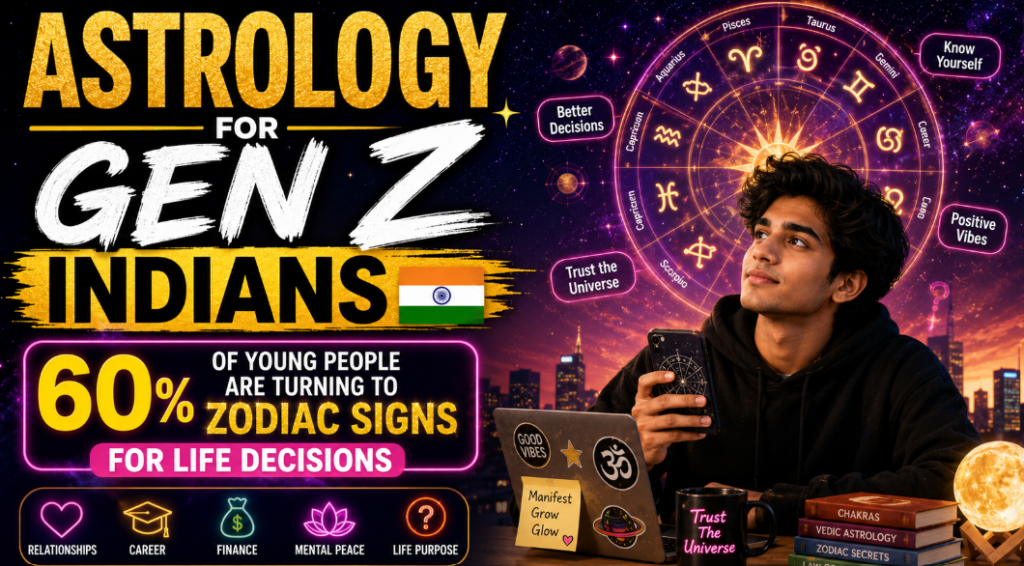
A 2025 survey by India’s leading digital lifestyle platform found that nearly 60% of Indian youth between the ages of 18 and 27 consult astrology content regularly before making major life decisions — from choosing career paths to picking a life partner. This is not just curiosity. For millions of young Indians, astrology has become a genuine personal compass.
So what is driving this shift? Why is a generation raised on smartphones and science suddenly looking at the stars for answers? Let’s explore this fascinating cultural movement.
The Numbers Don’t Lie — Gen Z Is Hooked on Astrology
The data around Gen Z’s relationship with astrology is genuinely surprising:
- Over 60% of Indian youth aged 18–27 follow astrology content regularly, according to a 2025 YouGov–Mint survey.
- Astrology-related searches on Google India have grown by over 40% year-on-year since 2022.
- Instagram accounts dedicated to Vedic astrology and zodiac content collectively hold over 50 million Indian followers.
- Apps like AstroTalk and Astrofite have seen a 3x increase in their Gen Z user base between 2023 and 2026.
- YouTube channels covering kundli reading, moon sign analysis, and transit predictions routinely cross 10 million views per video.
These are not fringe numbers. This is a mainstream cultural shift — and it is happening faster than most people realise.
2026 Is a Universal Year 1 in Numerology – What It Means for Your Life Path Number
Why Is Gen Z India Turning to Astrology?
1. The Uncertainty of Modern Life
Gen Z Indians are coming of age in one of the most unpredictable eras in recent memory. Post-pandemic job instability, rising cost of living, intense academic competition, and a deeply uncertain future have left young people searching for stability. Astrology provides what modern institutions sometimes fail to offer — a sense of meaning and predictability.
When a 23-year-old MBA graduate checks what Jupiter’s transit means for their career in 2026, they are not abandoning logic. They are seeking comfort in a framework that acknowledges uncertainty while still offering direction. That is deeply human.
2. Identity and Self-Discovery Through Zodiac Signs
One of astrology’s biggest gifts to Gen Z is the language of self-discovery. Knowing you are a Scorpio moon, a Libra rising, and a Virgo sun gives young people a rich vocabulary to describe their inner world. In a generation obsessed with self-awareness, therapy, and personal growth, astrology functions as an accessible and affordable alternative.
Many Gen Z Indians report using astrology not to predict the future, but to better understand their own patterns — why they react the way they do in relationships, why they feel unmotivated in certain careers, or why some friendships feel draining while others energise them.
3. Social Media Made Astrology Cool
The explosion of astrology content on Instagram Reels, YouTube Shorts, and even LinkedIn has completely changed how young Indians consume this knowledge. Astrologers are no longer just seen in TV studios with heavy gold jewellery. Today, they show up in aesthetic reels, crisp animations, and relatable meme formats.
When your favourite content creator drops a reel saying “This is exactly how a Capricorn handles heartbreak” and it describes your own experience to perfection, you start paying attention. Social media turned astrology from ancient scripture into shareable, personalised entertainment — and Gen Z lapped it up.
4. A Spiritual Hunger in a Secular World
India has always been a deeply spiritual nation. But Gen Z’s relationship with traditional religion is complicated. Many young Indians feel disconnected from the rigid rituals of organised religion, yet they carry a genuine spiritual hunger. Astrology fills that space beautifully — it is spiritual without being dogmatic, structured without being oppressive.
Vedic astrology in particular resonates with many Indian youth because it is rooted in their own cultural heritage. It does not feel foreign or imported. It feels like coming home to something that was always theirs.
5. Kundli Matching Has Gone Digital
In India, marriage remains a social institution with enormous family pressure. Kundli matching — the ancient Vedic practice of comparing birth charts before marriage — has seamlessly migrated online. Young people who may privately roll their eyes at arranged marriage traditions are still quietly checking compatibility scores on apps. According to a 2025 matrimonial platform report, over 85% of families using traditional matchmaking platforms still request Kundli compatibility checks.
What is changing is who is doing the checking. Increasingly, it is the 24-year-old themselves, sitting with their phone, exploring charts independently before any family is even involved.
How Astrology Is Influencing Real Life Decisions
This is not just entertainment. Gen Z Indians are using astrology in genuinely consequential ways:
Career Choices: Many young professionals consult astrologers before accepting job offers, switching careers, or starting businesses. The timing of major financial decisions — especially around Mercury retrograde periods — has become a real consideration.
Relationships: “What’s your moon sign?” has replaced “What do you do?” as an early dating conversation starter. Compatibility apps based on Vedic astrology are seeing explosive growth.
Mental Health Support: Some therapists and wellness coaches in India now integrate astrology into their sessions. For clients who find comfort in astrological frameworks, this blending can genuinely support the healing process.
Major Life Timing: Muhurta — the Vedic practice of choosing auspicious times for important actions — is seeing a revival among young entrepreneurs who pick auspicious dates to launch startups, sign contracts, or begin new ventures.
The Sceptic’s Perspective — Is It Healthy?
It is fair to ask whether this astrology boom is entirely beneficial. Critics argue that relying on zodiac signs for major decisions can lead to self-limiting beliefs — deciding not to pursue a relationship because of a “bad Rahu transit,” or avoiding a career move because Mercury is retrograde.
The healthiest relationship with astrology, most practitioners agree, is one of empowerment rather than determinism. Use astrology as a mirror for self-reflection, not a cage that locks your choices. The best astrologers will tell you the same thing: your free will is always the final authority.
Gen Z, notably, seems to understand this nuance. For most young Indians, astrology is one lens among many — not the only truth, but a meaningful one.
Astrology + Tech: A Match Made in the Stars
Perhaps the most fascinating dimension of this trend is how technology has supercharged astrology’s reach. AI-powered kundli generators, personalised transit alerts via mobile apps, astrologer video calls at ₹50 per minute, and daily horoscope WhatsApp bots have made ancient wisdom accessible to anyone with a smartphone.
Platforms like Astrofite.com are at the forefront of this digital astrology revolution — making quality Vedic content available for free, covering everything from Saturn transits to numerology to eclipse forecasts, in a format that speaks directly to digital-native Indian audiences.
This marriage of tradition and technology is precisely why astrology is not just having a moment in India. It is building a permanent, digital home in Indian youth culture.
What This Means Going Forward
The astrology boom among Gen Z Indians is not a fad. It is a reflection of deeper generational needs — the need for identity, meaning, community, and certainty in an uncertain world. As more young Indians seek answers beyond conventional frameworks, astrology will continue to grow as both a cultural touchstone and a personal guide.
Whether you are a true believer who studies your D9 chart every morning, a curious sceptic who reads horoscopes for fun, or a complete non-believer — one thing is clear. Astrology has earned its place in the conversation of modern Indian life. And Gen Z put it there.

Pratiksha Thakare is a Vedic astrology writer and spiritual researcher with deep study in Jyotish, numerology, and Hindu philosophy. She writes to make ancient wisdom simple and accessible for modern Indian readers.